
To increase dropshipping sales, fix the four things that quietly cost you orders: a weak product page, low trust, poor mobile experience, and no follow-up. Most stores that get traffic but few sales are converting somewhere between 1% and 3% of visitors, and roughly 70% of the shoppers who add to cart never finish checkout. That gap is where your next batch of sales already lives, so you rarely need a new “winning product” to grow.
In most cases, sales start to improve when you fix a few key areas: trust, clean design, traffic quality, and follow-up. Small improvements in these areas can lead to noticeable gains without spending more on ads. Or you might just want to start fresh with AI Store Generator.
Start With the Numbers That Matter
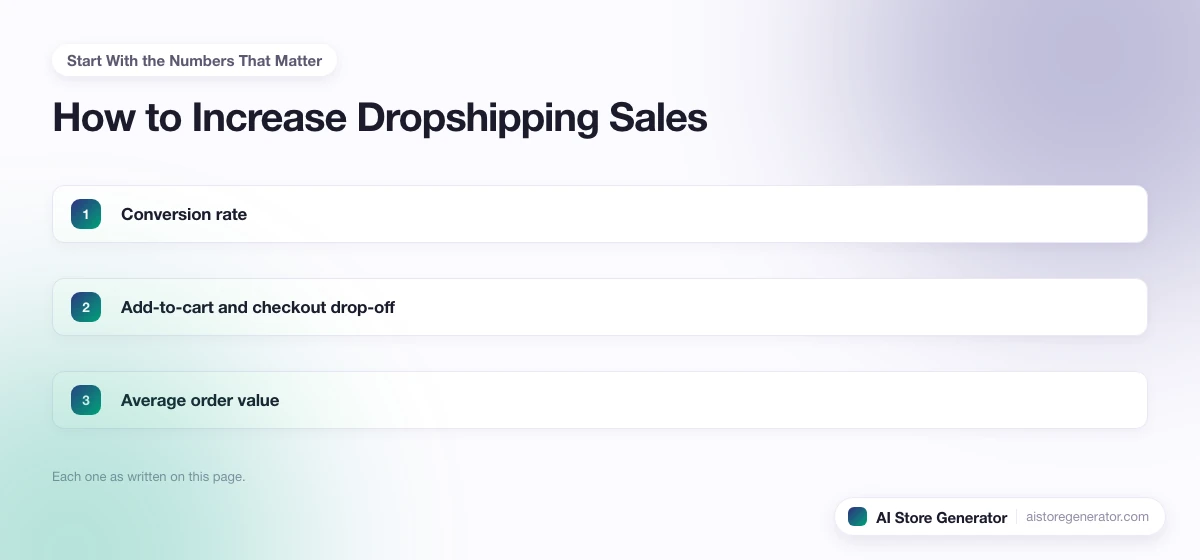
Before changing anything, find out where sales actually leak. Three numbers tell you almost everything:
- Conversion rate. A healthy dropshipping store usually sits around 1% to 3%. Under 1% points to a product-page or trust problem, not a traffic problem.
- Add-to-cart and checkout drop-off. If plenty of people add to cart but few buy, the leak is checkout or shipping cost, not your ads.
- Average order value. Raising the average cart by even a few dollars lifts revenue without a single extra visitor.
Fix the weakest number first. Chasing more traffic while your store converts at 0.5% just pours money into a leaky bucket.
A Quick Conversion Math Example
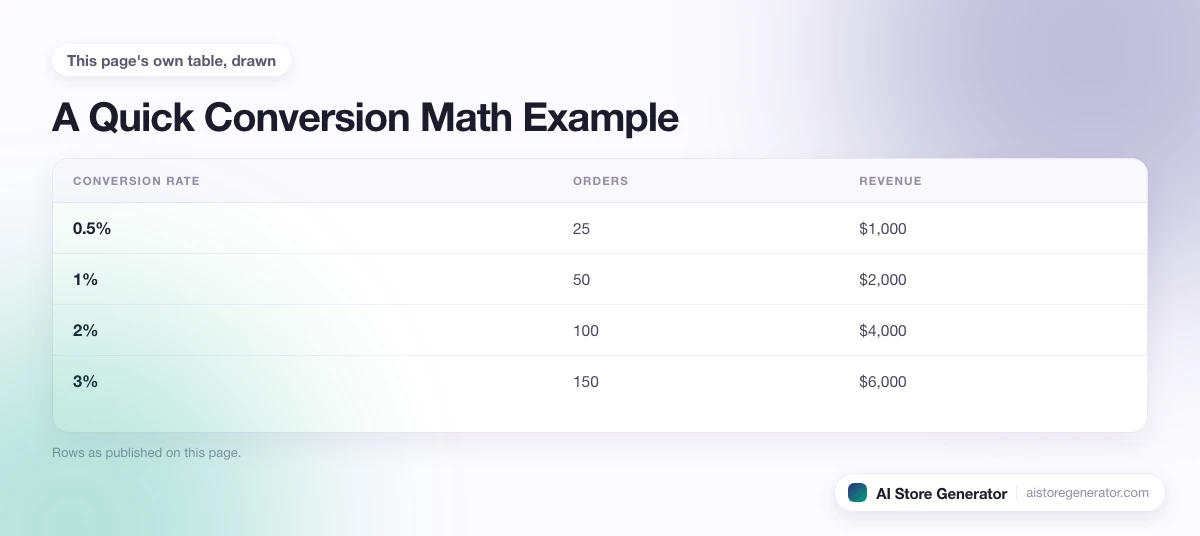
Numbers make the opportunity concrete. Say you send 5,000 visitors to your store in a month with a $40 average order value. Here is how small conversion changes move revenue on the exact same traffic:
| Conversion rate | Orders | Revenue |
| 0.5% | 25 | $1,000 |
| 1% | 50 | $2,000 |
| 2% | 100 | $4,000 |
| 3% | 150 | $6,000 |
Moving from 1% to 2% doubles revenue without a single extra visitor or dollar of ad spend. That is why fixing conversion usually beats buying more traffic, and why the tips below focus on the store itself before the ads.
How to Increase Shopify Dropshipping Sales: Best Tips
Improve Your Product Pages First
Your product page does most of the selling for you. If it is unclear or unconvincing, traffic will not convert. This is part of what’s called conversion optimization.
Focus on:
- Clear product images that show the item in use, plus one short demo video if you have it
- Descriptions that explain benefits, not just features
- Answers to common questions like shipping time and returns, right on the page
- Simple layout that is easy to scan
Customers should understand what the product does, who it is for, and why it is worth buying within seconds.
Build Trust Immediately
Dropshipping stores rely heavily on trust. If your site feels questionable, people hesitate.
Simple trust builders include:
- Customer reviews and ratings on every product
- Clear refund and return policies
- Secure payment icons and a visible contact option
- Professional design and branding
The goal is to remove doubt before it turns into hesitation. A first-time buyer who has never heard of your brand needs a reason to believe the package will actually arrive.
Optimize for Mobile Buyers
Most dropshipping traffic comes from mobile devices, often 70% or more when it arrives from social ads. If your store works well on desktop but feels awkward on a phone, sales will suffer.
Make sure:
- Buttons are easy to tap
- Text is readable without zooming
- Checkout is smooth on mobile
- Pages load in under three seconds
Always test your store on your own phone, and buy something to feel the checkout the way a customer does.
Focus on Traffic Quality, Not Just Volume
More traffic does not automatically mean more sales. Low-quality traffic often leads to high bounce rates and poor conversions.
Make sure your ads and content attract the right audience. Your messaging should clearly describe who the product is for and what problem it solves. This filters out people who are unlikely to buy, so you pay for clicks that can actually turn into orders.
Use Retargeting to Recover Lost Sales
Most visitors will not buy on their first visit, so plan to reach them again within a few days while interest is still warm.
Retargeting ads, which you can run with social media ads, let you reach people who:
- Viewed a product
- Added items to cart
- Started checkout but did not finish
These visitors are already interested. Bringing them back with a reminder, a review, or a small incentive often turns into the easiest sales you will make all week.
Offer Incentives Without Hurting Margins
Discounts are effective, but they should be used strategically so you do not train customers to wait for the next sale. This matters most in November, and the Black Friday promotion ideas that hold up on a thin margin are mostly the ones that do not touch your unit price at all.
Options include:
- Free shipping above a set order value (this also lifts average order size)
- Limited-time discounts tied to a real deadline
- Bundle deals
- Small bonuses instead of price cuts
The goal is to give customers a reason to act now.
Simplify the Checkout Process
Checkout friction kills sales, and it is where that 70% cart-abandonment number does the most damage.
Reduce unnecessary steps, remove forced account creation, show shipping cost early, and offer multiple payment options including one-tap wallets. The easier it is to buy, the more people finish.
Use Email to Increase Repeat Sales
Email marketing helps you get more value from traffic you already paid for.
Use email for:
- Abandoned cart reminders (the first one within an hour tends to recover the most)
- Follow-ups after product views
- New product launches
- Customer win-back campaigns
Selling to someone who already knows your brand is easier and cheaper than finding a new customer.
Increase Average Order Value
Instead of only chasing more sales, make each sale bigger.
You can raise average order value by:
- Adding upsells or cross-sells on the product and cart pages
- Offering bundles or “frequently bought together” sets
- Setting a free-shipping threshold just above your typical cart
This makes more money from the same number of customers.
Test and Improve One Thing at a Time
Guessing leads to wasted effort. Change one variable, give it enough traffic to judge, then keep or drop it.
Test changes like:
- Different product images
- New headlines
- Alternate pricing or offers
- Different calls to action
Small improvements add up over time and show you what actually drives sales in your store.
Common Mistakes That Quietly Cost You Orders
Some sales leaks are easy to miss because the store looks fine at a glance. These are the ones we see most often:
- Using the supplier’s stock photos. Shoppers recognize generic supplier images and lose trust. Swap in your own photos, lifestyle shots, or at least edited versions.
- Hiding shipping cost until the final step. A surprise fee at checkout is one of the biggest reasons carts get abandoned. Show it early or build it into the price.
- No delivery time on the product page. If people cannot tell whether an item arrives in 5 days or 5 weeks, many will not risk the order.
- Zero reviews on new products. An empty review section reads as untested. Import supplier reviews or gather a few early ones before you scale ads.
- Slow, heavy images. Large uncompressed photos push load time past three seconds on mobile, and every extra second drops conversions.
- Vague return wording. A clear, plain-language return policy removes the last hesitation. A buried or confusing one adds it back.
Fixing even two or three of these often lifts conversion more than a new ad campaign, because you are removing reasons to say no from people who already wanted to buy.
Try AI Store Generator
Build a Shopify Store in 2 Minutes
Frequently Asked Questions
Why is my dropshipping store getting traffic but no sales?
Traffic without sales almost always points to conversion, not traffic. Check your conversion rate first: under 1% usually means a weak product page, missing trust signals, or unexpected shipping costs at checkout. Fix those before spending more on ads.
How long does it take to increase dropshipping sales?
Quick wins like fixing checkout, adding reviews, and turning on abandoned-cart emails can show results within days. Bigger gains from better traffic targeting and testing usually take a few weeks of consistent changes to measure fairly.
What is a good conversion rate for a dropshipping store?
Most dropshipping stores convert between 1% and 3%. If you are below 1%, focus on your product pages and trust signals. If you are above 3%, focus on driving more qualified traffic and raising average order value.
Do I need to lower prices to sell more?
Rarely. Lowering prices cuts margins and can make a store look cheap. Better levers are stronger product pages, free-shipping thresholds, bundles, and follow-up emails, all of which lift sales without eroding profit.
How do I get more repeat customers in dropshipping?
Collect emails at checkout, send a helpful post-purchase sequence, and give past buyers a reason to come back, such as a restock alert or a small returning-customer offer. Repeat buyers cost far less than new ones and lift lifetime value.
How many sales should I expect from 1,000 visitors?
At a typical 1% to 3% conversion rate, 1,000 visitors turn into roughly 10 to 30 orders. If you are seeing fewer than 10, the issue is almost always the product page, trust signals, or checkout rather than the amount of traffic.
Does adding more products increase sales?
Not on its own. A focused store with a few strong products and clear pages usually outsells a large catalog of thin listings. Add products when each one earns its place, not to look bigger.
Final Thoughts on Increasing Sales
Increasing dropshipping sales is rarely about one big change. It usually comes from fixing small issues across your store and Shopify dropshipping marketing.
Focus on trust, clean design, and customer experience. Improve how traffic is targeted, how products are presented, and how visitors are followed up with.
When those pieces work together, sales grow more consistently and predictably.