
AI Print on Demand Store Builder, Live in 5 Minutes
A print on demand store, connected to a supplier and stocked with designs, ready to take orders.
Live in about five minutes, with no stock to buy and nothing to ship yourself.


Trusted by 3,200 Businesses
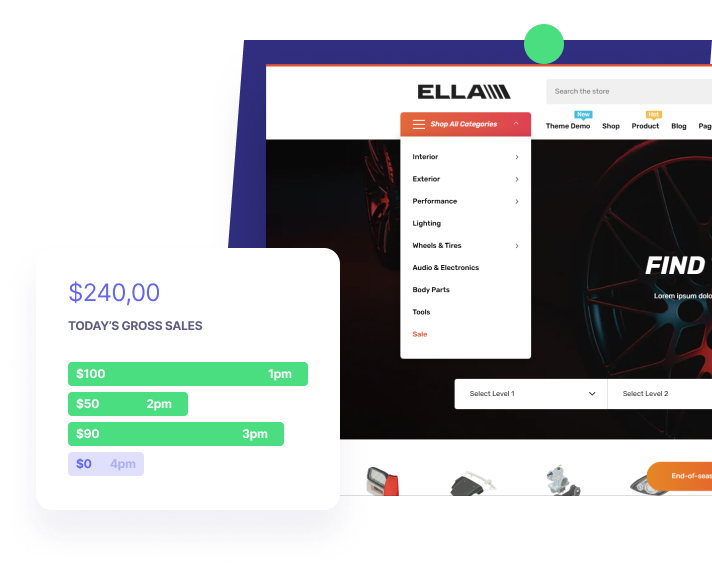
Designs and products, already loaded
Your store opens with print on demand products already listed against a supplier, so the mockups, the sizes and the prices are set before you log in.
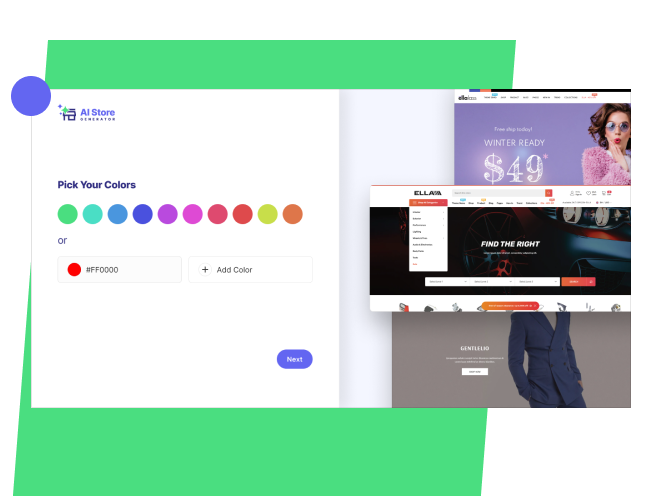
A theme built to convert, yours to change
A theme designed around getting people to checkout, with room for the lifestyle images print on demand sells on. Every color, font and section stays editable.
Pages that are already written
Product pages, sizing and shipping information, and the policy pages a print on demand buyer checks before ordering, all written and in place.

Pick your niche and your products
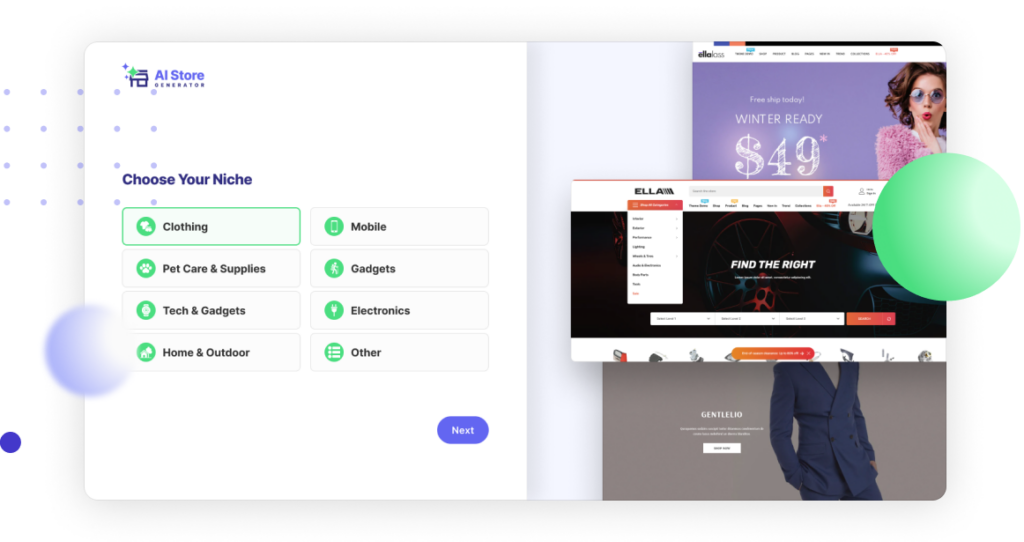
Choose one of the print on demand niches we have researched, or tell us yours.
Look it over
Our AI builds the store, connects the supplier and sends you the details to log in.
Start selling
An order comes in, the supplier prints and ships it. You never touch stock.
Success stories
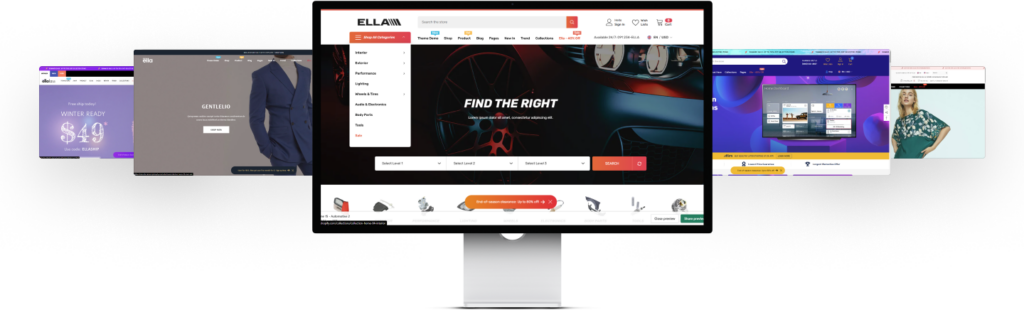
What sellers tell us
A store is only worth building if it sells something. Here is what people have done with theirs.
The winning products provided by the AI Store Generator is beyond what I was expecting. It was a game-changer for my drop shipping store.

Christopher Blackwell


What a print on demand store builder settles before your first order
Most guides to starting a print on demand store read as a list of things to do: pick a niche, make a design, connect a supplier, publish. The order is right, but it hides where the money is actually decided. Four things get fixed at build time, and each one is awkward to change once you have listings indexed and ads running.
- Which supplier each product is tied to. The base cost and the print method come from the supplier, not from you. Change supplier later and every variant, mockup and price has to be rebuilt.
- How many variants each design carries. One t-shirt offered in five colours and six sizes is thirty variants. Ten designs on that same garment is three hundred rows to price, photograph and keep in stock status.
- Your retail price floor. Print on demand has no bulk discount to grow into. The margin on your tenth order is the margin on your thousandth, so a price set too close to base cost stays thin forever.
- Which pages a buyer can find. Sizing, shipping times and returns are the three pages a custom apparel buyer checks before paying. If they are missing the sale is lost quietly, and nothing in your analytics tells you why.
Those four are the work this store builder does before you ever log in, which is why the products it lists arrive priced and variant-complete rather than as empty placeholders.
Where print on demand stores usually stall
The designs are rarely the problem. These are the four things that quietly cap a store, in roughly the order they bite.
- Delivery time belongs to the printer. Your product ships when the printer prints it, so a two-day promise you cannot keep is worse than an honest window. Put the real range on the product page and the shipping page.
- Every mockup looks the same. Stores on the same supplier show the same flat shirt on the same white background. The ones that convert add at least one photograph of the product being worn or used.
- Too many niches in one store. Dog quotes, gym slogans and national park prints under one roof reads as a marketplace with no reason to trust it. One subject per store is easier to rank and far easier to advertise.
- No reason to come back. Custom apparel is a single purchase unless something brings the buyer back. A new design drop on a schedule does more for repeat orders than a discount code.
What we see when we build these stores
We build Shopify stores for a living, and the print on demand ones fail in a narrower set of ways than people expect. Almost nobody is beaten by their artwork. They are beaten by three hundred near-identical variants, a missing sizing page, and a shipping estimate copied off a dropshipping template. The build is the cheap part to get right and the expensive part to fix later, which is the reason we automated it instead of handing people a checklist.
The other habit we dropped is loading a new store with everything a supplier offers. A store that opens with a focused set of products on one subject does better than the same store with the full catalogue bolted on, because every extra product is one more page competing for the same attention. AI Store Generator now builds the narrow version by default and leaves you to widen it once something sells.
A storefront generator, not a theme download
People reach this page looking for a Shopify store generator, an AI storefront generator, or simply a way to auto generate a storefront. Those searches mostly return themes, and a theme is a layout with nothing in it. What you get here is a storefront with products listed against a real supplier, prices set, policy and sizing pages written, and the SEO basics already in place. The login details come to you and the store is yours to change.
If you want the long version first, the Shopify print on demand guide walks through the full setup, choosing a print on demand supplier compares the ones worth using, and print on demand companies covers what each of them prints.
Frequently Asked Questions
Questions before you start? The answers are below, and if yours is not there, send us a message.
What can I realistically make?
We take the build off your plate so your time goes into traffic instead of setup. What you earn after that depends on what you sell and how you market it. Some sellers see a first order in the opening week, others take longer.
What exactly do I get?
A working print on demand store with products listed against a supplier, pages written and the SEO basics already set. You own it and you keep everything it makes.
Can I add my own designs?
Yes. Add as many designs and products as you like. The store is yours to run.
I lost my password
Use the lost password link on the login page and we will send you a reset.
Are print on demand stores profitable?
They can be, and the arithmetic is simple enough to check before you start. Your margin is the retail price minus the supplier’s base cost, minus the payment fee, minus whatever you spent to get the visitor. Print on demand has no bulk pricing to grow into, so that margin does not improve with volume. The stores that work price well above base cost and sell to one audience instead of competing on being cheapest.
How much does it cost to start a print on demand store?
The stock costs nothing, because nothing is printed until someone orders. What you do pay for is a Shopify plan, a domain, and any design work you are not doing yourself. Supplier accounts are free to open and the supplier takes its base cost out of each sale. The real budget line is traffic, not inventory.
Is there a free way to create a print on demand store?
You can get most of the way without paying anyone but Shopify. Supplier accounts are free to open, listings are free to create, designs you make yourself cost nothing, and we build the store at no charge. What is not free is the Shopify plan once your trial ends, and a domain if you want your own name on it.
How do I build a print on demand store?
Pick one subject, choose the products you want to print on, open a supplier account, create the listings with your designs, write the sizing and shipping pages, then connect a payment method. By hand that is most of a weekend, and the variants are the slow part. Tell us the niche instead and the store comes back built, usually in about five minutes.
Can AI generate a Shopify storefront automatically?
Yes, and that is what happens here. You give us the niche and the products, and the storefront is generated with listings, prices, a theme and written pages already in place. What no AI can do for you is the marketing after launch, so treat a generated store as the starting line rather than the finish.
Your print on demand store is five minutes away
Keep reading
- Shopify Print on Demand: Complete Guide
- Best Print on Demand for Shopify
- Print on Demand Companies
- Printful vs Printify: What Each One Does to Your Store
- Print on Demand Business
- Best Print on Demand Sites
- Print on Demand Websites: What Yours Has to Tell Buyers
- Print on Demand Suppliers: Who Actually Prints Your Order