
Build a Shopify Dropshipping Store with AI
A dropshipping store with the products chosen, the suppliers explained and the pages written, ready to take orders. Live in about five minutes, with no tech work on your side.


Trusted by 3,200 Businesses
Products picked for dropshipping margins
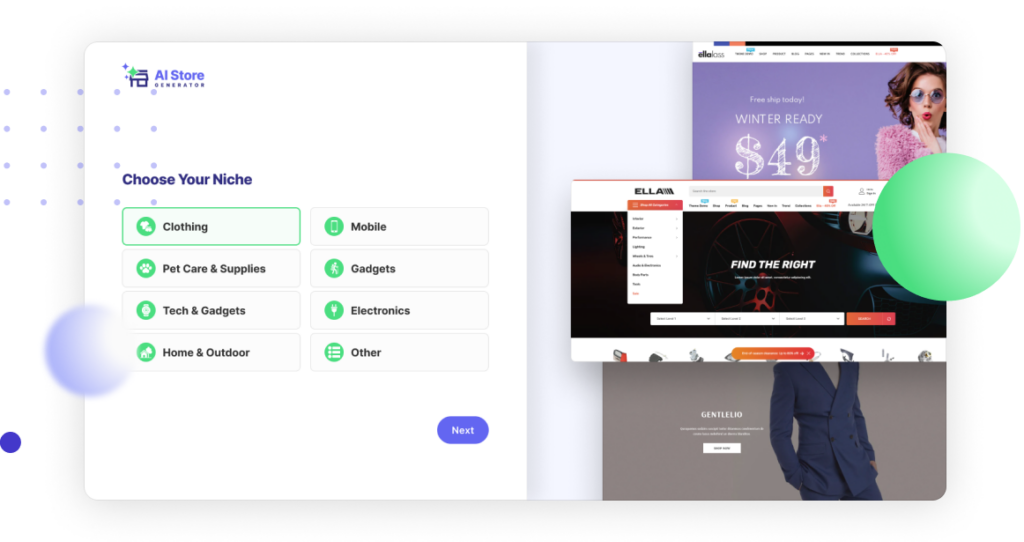
Ten products chosen from what is already selling in your niche, loaded and priced, so you have something to put an ad behind on day one.
A theme that handles long shipping times
A theme designed around getting people to checkout, with the delivery window stated where a buyer will actually read it. Every color, font and section stays editable once the store is live.
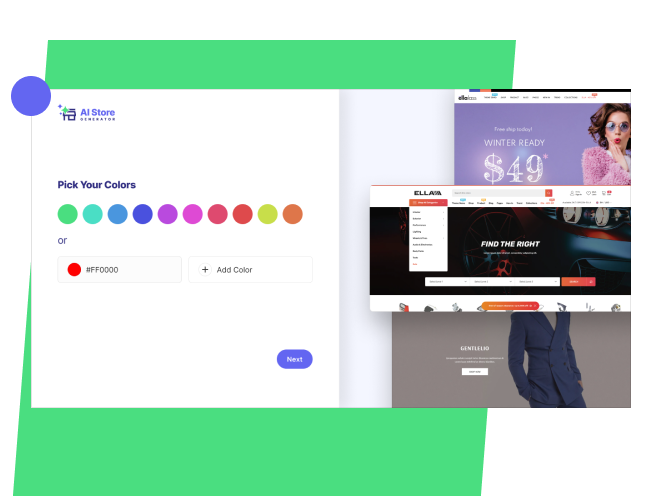
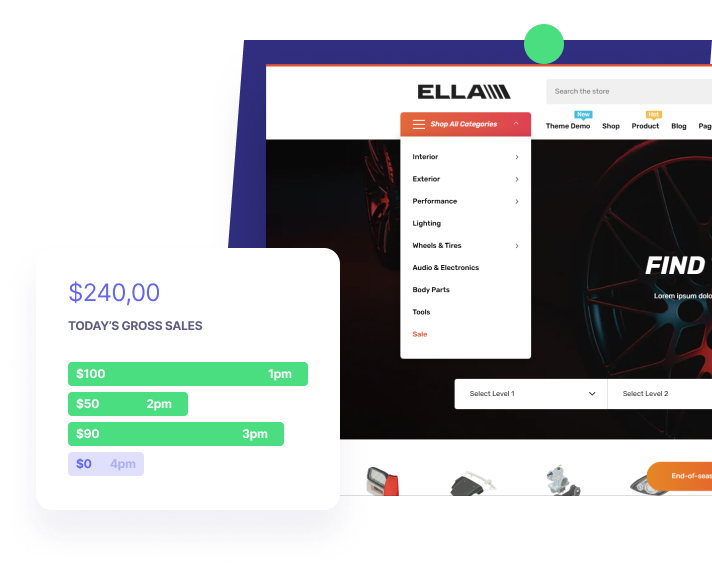
The pages a dropshipping buyer looks for
Product pages, policy pages and the pages a dropshipping buyer looks for are written and in place before you get the login.
Success stories
What sellers tell us
A store is only worth building if it sells something. Here is what people have done with theirs.
The winning products provided by the AI Store Generator is beyond what I was expecting. It was a game-changer for my drop shipping store.

Christopher Blackwell


What makes a dropshipping store different to build
A dropshipping store looks like any other Shopify store from the front. Behind it, three things change, and all three affect how the store has to be set up.
You hold no stock, so the product pages have to sell something you have never handled. The descriptions and images do the work a shelf would normally do.
Your supplier sets the shipping time, and it is usually longer than a buyer expects. A store that hides that gets refund requests. A store that says it plainly on the product page and again at checkout keeps the order.
Your margin is thinner than retail, so the price has to cover the product, the shipping and the ad that brought the buyer. Pricing at a flat markup is how most new stores end up busy and unprofitable.
The build accounts for all three: shipping expectations written into the product and policy pages, prices set with ad cost in mind, and descriptions written to sell without a photo of your own.
How the products get chosen
Ten products land in the store, and they are not picked at random.
- They are already selling in the niche, rather than untested items with no demand behind them
- They sit in a price band that leaves room for an ad spend and still returns a margin
- They avoid the categories that get accounts shut down: branded goods, medical claims, anything restricted
- They ship in a window a buyer will accept
- They work together as a range, so a visitor has a reason to look at a second one
If you already know what you want to sell, type the niche in and the same rules apply to it. There is a longer write-up in Best Dropshipping Niches.
Connecting a supplier
The store arrives with products in it. Fulfilment is the part you choose, because it decides your shipping times and your margins.
Most people start with AliExpress, which has the widest catalogue and the longest delivery times. Agents and private suppliers cost more per unit and ship faster, which usually matters more once you have orders coming in regularly. Domestic suppliers ship fastest and squeeze margin hardest.
There is no single right answer, and it is worth reading before you commit:
What it costs to start dropshipping this way
Building the store costs nothing. The costs that follow are the same ones every dropshipper has.
- The builder: free, as many stores as you want
- Shopify: three-day trial, then $1 a month for three months, then a standard plan
- Products: nothing up front, because you buy each one only after a customer has paid for it
- Ads: the real number, and the one that decides whether the store works
That last line is the one worth sitting with. Dropshipping has almost no starting cost and a real running cost, which is the opposite shape to most businesses. The full breakdown is in How Much Money to Start Dropshipping.
Frequently Asked Questions
Questions before you start? The answers are below, and if yours is not there, send us a message.
Can AI build a dropshipping store?
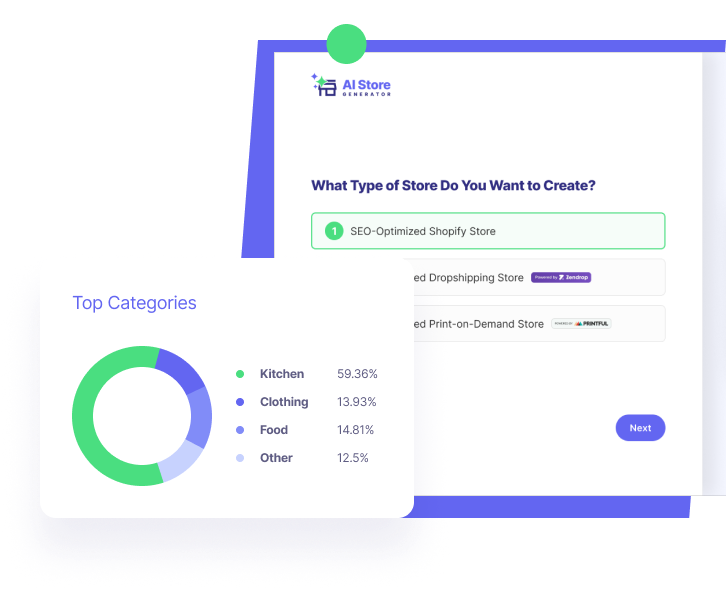
Yes. It picks products that are already selling in your niche, loads them with descriptions and prices, writes the policy pages and publishes the store to your Shopify account.
Do I need a supplier before I build the store?
No. Build first and choose fulfilment after. The products are loaded either way, and swapping a supplier later does not mean rebuilding.
Is dropshipping still worth starting?
It works where you have an angle: a niche you understand, a product that is hard to find locally, or traffic you can already reach. It does not work as a way to sell the same item as everyone else at the same price.
How long do orders take to arrive?
That is your supplier’s number, not ours. AliExpress is commonly two to four weeks. The store is set up to say so plainly, which is what keeps the refund requests down.
What does it cost to start?
The build is free. Shopify starts with a three-day trial and then $1 a month for three months. You buy stock only after a customer has paid you for it.
Can I sell my own products too?
Yes. Add as many as you like alongside the dropshipped ones.
Do I own the store?
Yes, and everything it makes. It publishes into your own Shopify account, in your name.